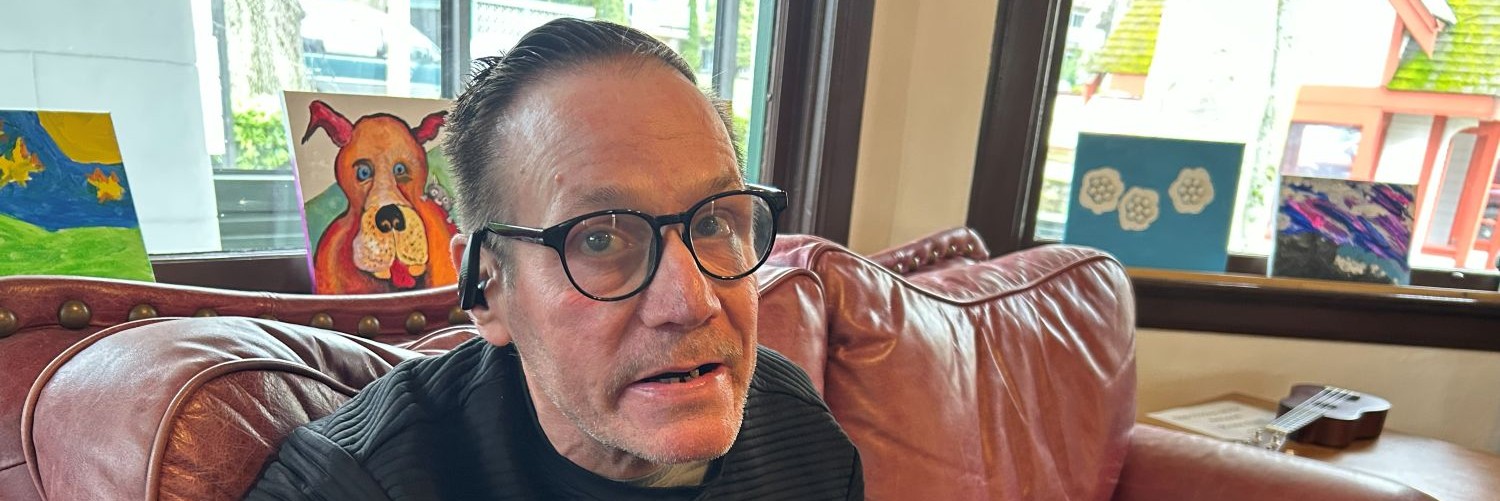
Finding His Footing: How Ray’s Work Experience Became a Path Forward
Ray* doesn’t shy away from the truth. He’s direct, confident, and clear about who he is today, as well as about the long road it took to get here.
At 60 years old, Ray is proud of the life he’s building for himself in Victoria, BC: stability, purpose, and the confidence that comes with meaningful work.
That sense of forward momentum didn’t arrive overnight. It was built step by step, through community support, trust, and an opportunity made possible by United Way BC’s Work Experience Opportunities Grant (WEOG), funded by the Government of Canada and the Province of British Columbia.
WEOG creates paid, part-time work experience for people facing barriers to employment, helping them build confidence, skills, and stability. With United Way BC’s support, non-profit organizations can tailor opportunities to meet people where they are—and help them climb their own ladder toward independence.
Aptitude meets opportunity
Before WEOG, Ray knew what kind of work suited him best. Janitorial services felt right. He liked the structure, the independence, and the ability to work two to three hours at a time.
“It was something he felt good about doing,” says Jennifer Freeman from Beacon Community Services, one of 136 non-profits receiving funding from WEOG in 2025. Beacon Community Services worked closely with Ray through BEAMS (Beacon’s Empathetic and Aspirational Method of Service), which assists people who may be experiencing challenges to employment due to mental health, unstable housing, and/or substance use, become eligible for work in BC. “And he already had experience in cleaning—it felt comfortable and achievable.”
Through BEAMS, Ray began building independent work experience, starting small by cleaning at BEAMS and nearby Beacon offices once a week. It was a modest beginning, but a crucial one. Then WEOG opened the door to something more formal.
“The WEOG opportunity allowed us to create a defined position for Ray,” Jennifer explains. “It helped him move from being a client to being part of the project: someone who worked here.” That shift mattered. Not just on paper, but emotionally. “It had an incredibly positive impact on his self-esteem,” she says. “He felt like he belonged somewhere again.”
With funding to create time-limited paid work experience, program participants like Ray receive essential skills training and hands-on experience to improve their employability while preparing them for in-demand jobs. And agencies like Beacon Community Services can enhance their program and service offerings to support more community members.
For Ray, that validation was powerful. After years of instability, recovery, and health challenges, being trusted with responsibility changed how he saw himself. “WEOG gave me structure and confidence,” Ray says. “My confidence in my cleaning skills increased.”
That confidence showed up in his work. Ray took pride in doing things right—emptying garbage, cleaning bathrooms, wiping counters, mopping floors, and paying attention to details others might miss, especially corners. He managed his time well, worked independently, and earned the trust of the people around him. “I was left to my own,” he says. “I was trusted.”
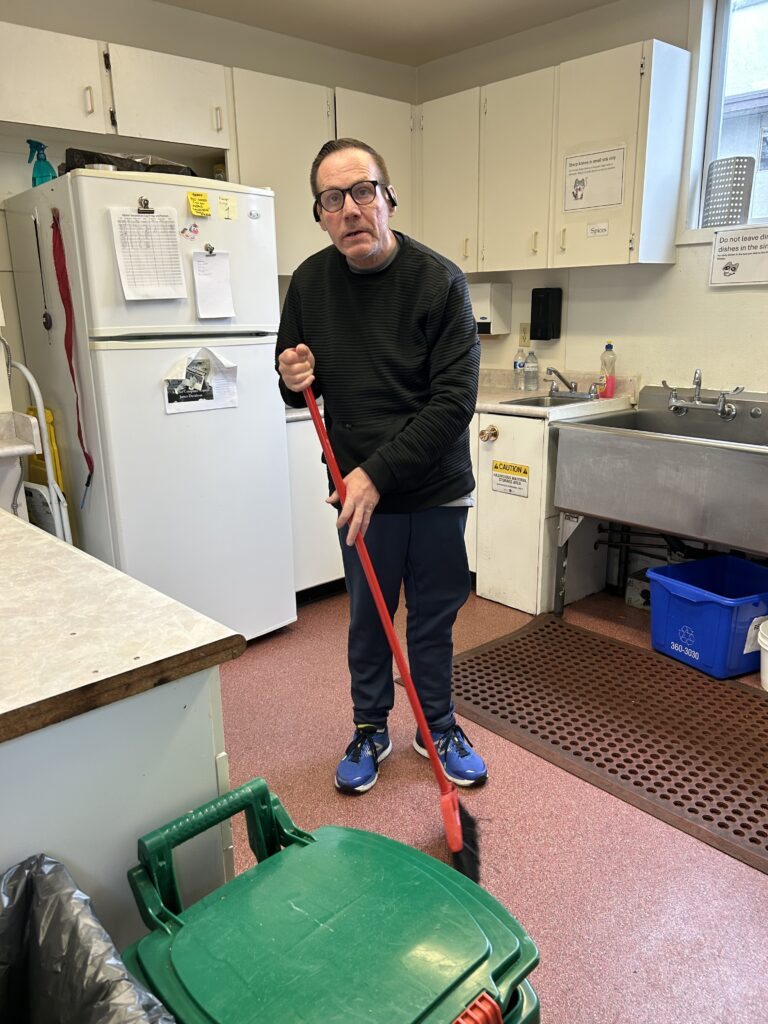
Ray in the BEAMS kitchen.
Employment success
That trust extended beyond Beacon. With support from staff, Ray applied for janitorial work outside the program. He landed a job quickly—so quickly, in fact, that his new employer texted him within 20 minutes of receiving his resume and asked him to start that same morning.
In that role, Ray continued to excel. His boss gave him the alarm code and keys after just two days. When a floor scrubber machine malfunctioned, Ray calmly figured out how to fix it. When he noticed that he was getting burnt out, he communicated honestly and helped find a solution. His reward? A bonus he never expected.
“It felt good,” Ray says simply.
Maintaining employment hasn’t been easy. Ray navigates chronic pain, ongoing health issues, and a physically demanding routine that starts well before dawn. He wakes up early, walks to work, and carefully manages his energy. But through it all, he shows resilience and discipline.
“It’s a completely new routine,” Jennifer says. “And on top of that, he’s managing complex health barriers. But Ray has been doing amazing. He’s staying committed.”
That commitment is rooted in something bigger than a paycheque. For Ray, work represents independence—and the next step toward his long-term goal: having a place of his own.
Increased stability
After years of shared and transitional housing, Ray is preparing for independent living. He’s working with Island Health to find suitable housing and supportive services, and he’s excited—even as he acknowledges the challenge ahead. “I’m looking forward to the privacy,” he says. “And the space.”
Community remains a cornerstone of his success. Through Beacon, recovery groups, and work, Ray has built meaningful connections. “The staff aren’t just staff; they’re friends,” he says. “People I can rely on.” When transportation was a challenge, Jennifer helped arrange taxi vouchers. When Ray talked about getting his own place, friends offered to help furnish it. These moments of care add up.
When asked what United Way BC’s support of WEOG means to him, Ray doesn’t hesitate. “If it wasn’t for this job, I wouldn’t have gained the skills and confidence I have now,” he says. “WEOG helps people who are less fortunate gain work experience—and believe in themselves.”
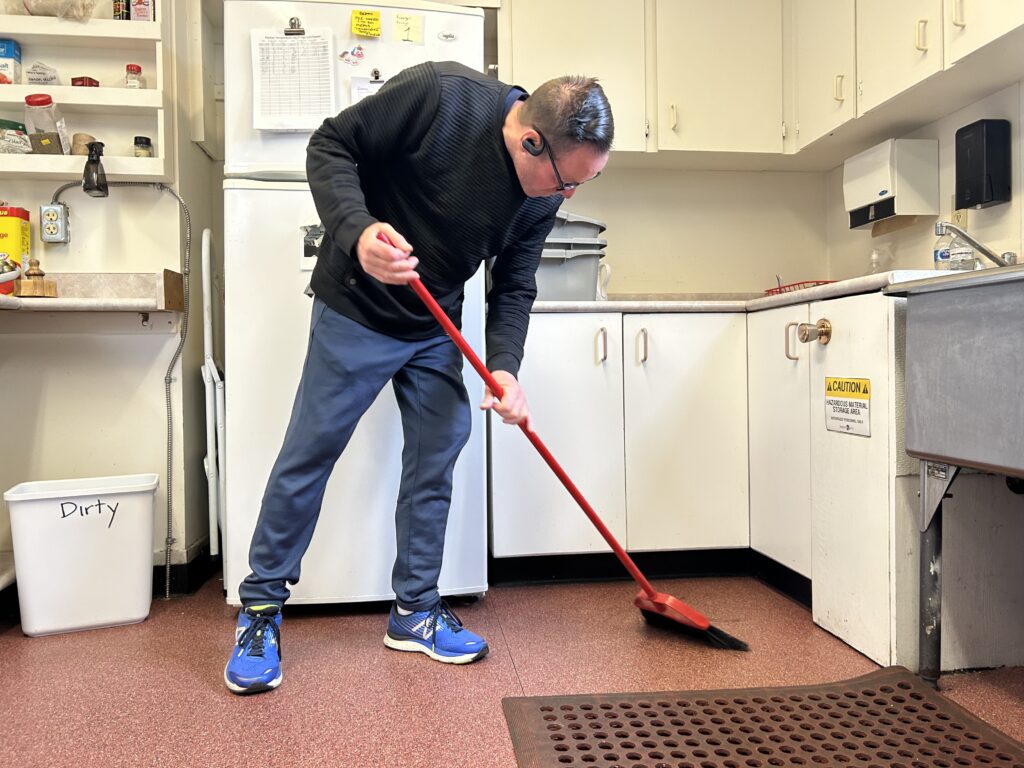
No corner is ever neglected when Ray is wielding a broom.
Changing lives
As Ray looks ahead, he knows there’s still work to do. But he’s no longer standing still. He has momentum, purpose, and a future he’s actively shaping.
“Confidence, discipline, independence,” someone once said to him during an interview. Ray smiles at that. Those words fit.
And thanks to WEOG—and a community that believed in him—they’re more than just words. They’re a life taking shape.
The WEOG grant was introduced in June 2025 and has served 500 program participants through a diverse range of opportunities. In 2026, a further 737 individuals on income and disability assistance will have placements at 179 non-profit agencies.
*Name changed to protect privacy.